01
Journal Core
Central configuration for title, publisher, ISSN, DOI prefix, licence, language, PDF structure and issue conventions.
Create structured article landing pages with DOI metadata, citation exports, PDF previews, author information and scientific discovery features.

JournalForge focuses on the publication stage after editorial acceptance. It connects the final article file with a structured and discoverable WordPress record.
Central configuration for title, publisher, ISSN, DOI prefix, licence, language, PDF structure and issue conventions.
Upload DOCX, PDF or ZIP packages, review detected metadata and generate consistent article pages without automatic publication.
Google Scholar tags, Schema.org records, citation files and structured publication data from one controlled source.
APA 7, Harvard, Chicago, BibTeX, RIS, EndNote XML and CSL JSON with copy and download functions.
Analyse and modernize existing WordPress article pages while preserving public URLs, dates and scientific data.
Verify PDF location, DOI format, essential metadata, citation records and article readiness before publication.
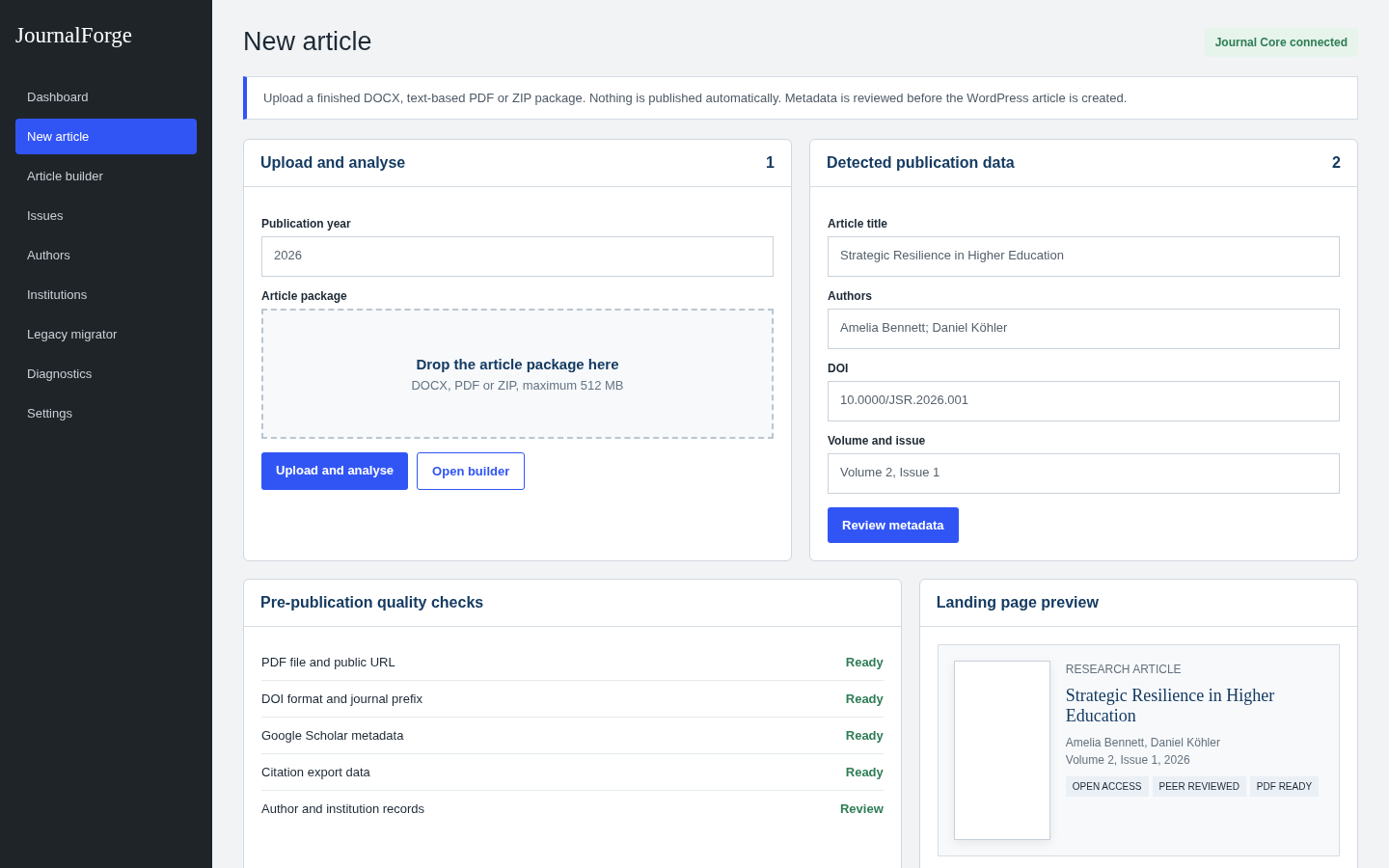
The article remains unpublished while the editor checks the detected title, authors, DOI, issue data and publication files.
Every article receives the same professional structure, including PDF preview, DOI, volume and issue data, abstract and clear access points.
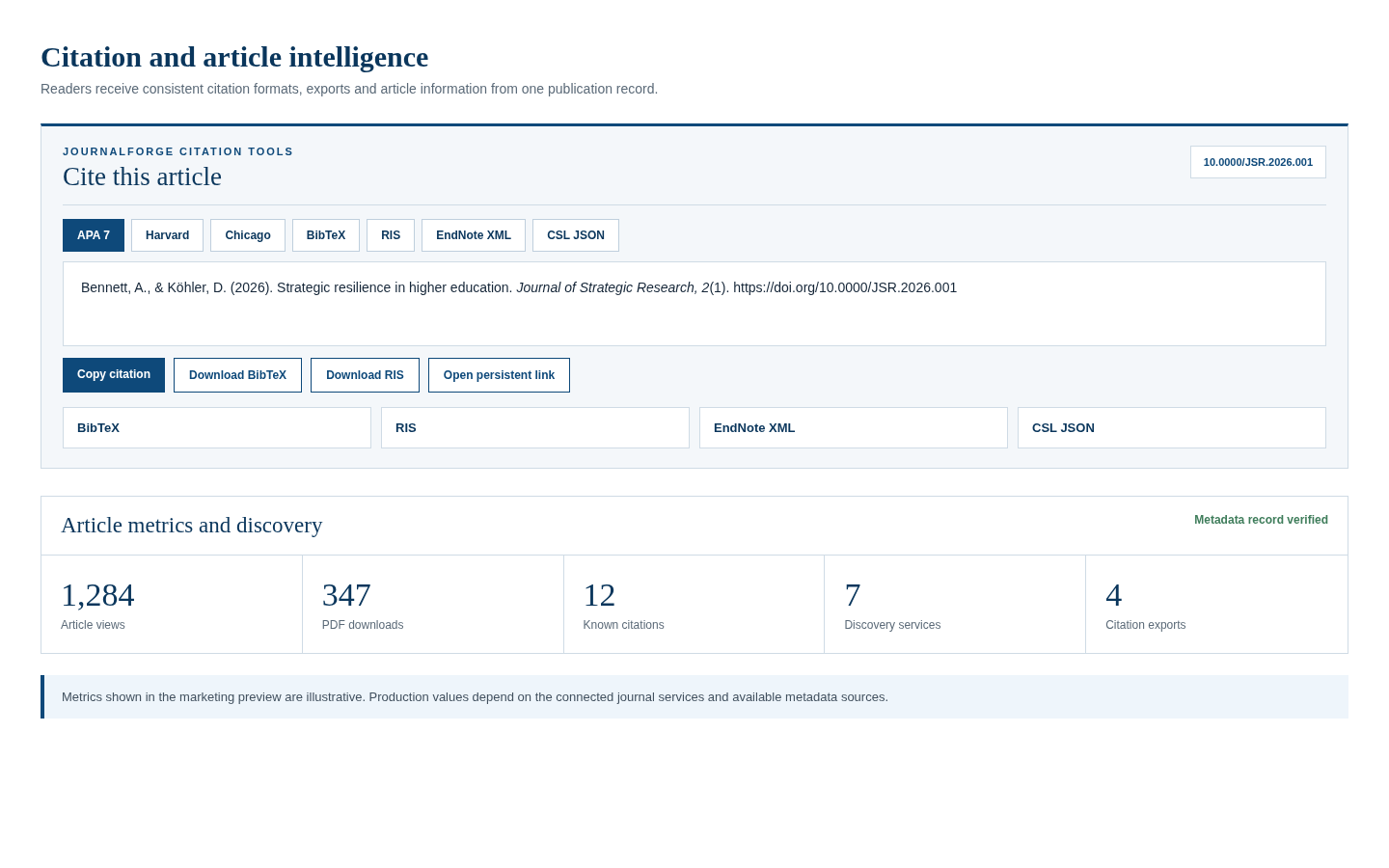
Readers can copy standard citations and download common research formats without relying on an external citation website.
The pilot package is designed for a small or medium-sized academic journal that wants to replace fragmented manual publishing with one controlled WordPress workflow.
IJPSC serves as the reference environment for the publishing workflow. The software was developed around real requirements including DOI identifiers, article PDFs, structured metadata, citations, authors, institutions and issue-based publication.
Open IJPSCNo. The first commercial version starts after editorial acceptance and supports publication, metadata, citation and discovery functions.
No. DOI and Crossref functions are read-only unless a separate, explicitly commissioned deposit module is developed later.
No. It can create and validate technical metadata, but external services make their own inclusion and indexing decisions.
The Legacy Migrator is designed to preserve existing page IDs, slugs, dates and public URLs. Every migration is reviewed before final conversion.
A short assessment covers article structure, DOI records, PDF storage, citation functions, metadata quality and the number of pages requiring migration.
Request a journal audit